LIBRARY
The hunger research library
Here is a working collection of the reports, datasets, papers and books consulted for the Hunger Project. We will continue to add to this list from time to time.
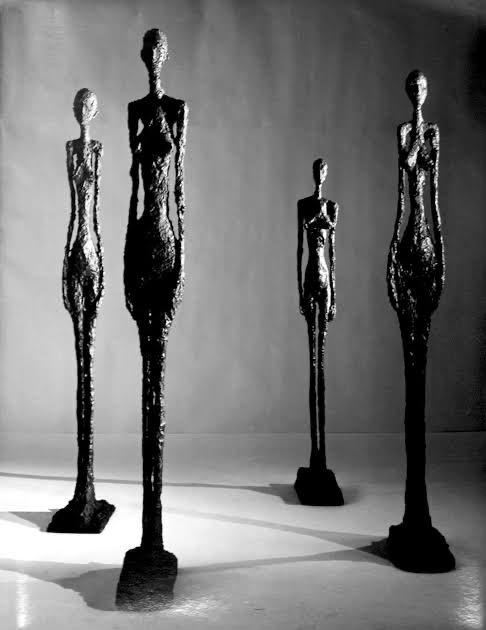
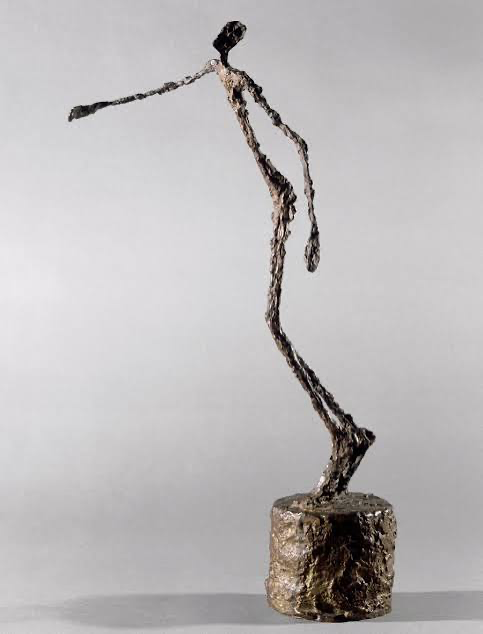
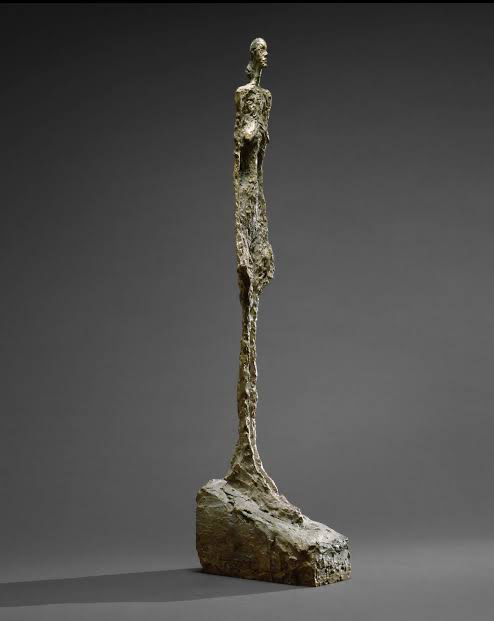
— Alberto Giacometti
REFERENCES
- Apt Russell, S. (2005) Hunger: An Unnatural History New York: Basic Books.
- Balslev, A.N. (2019) A Study of Time in Indian Philosophy Delhi: D.K. Printworld.
- Bakhtin, M. 1981 ‘Forms of Time and the Chronotope in the Novel’ in The Dialogic Imagination Austin: University of Texas Press.
- Beer, G. (1983). Darwin’s plots: Evolutionary narrative in Darwin, George Eliot, and Nineteenth-century fiction. Routledge & Kegan Paul.
- Dennett, D. C. (1991). Consciousness explained. New York: Little Brown.
- Dennett, D. C. (1992). The self as a center of narrative gravity. In F. Kessel, P. Cole, & D. Johnson (Eds.), Self and consciousness: Multiple perspectives
- Foucault, M. (1988) Technologies of the Self: A Seminar eds. Luther H. Martin, Huck Gutman, Patrick H. Hutton, London: Tavistock Publications
- Kafka, F. (1922) The Hunger Artist or Ein Hungerkünstler, first published in Die neue Rundschau, English translation H. Steinhauer and H. Jessiman, 1938.
- Labov, W. (1972). The transformation of experience in narrative syntax. In Language in the inner City. Philadephia: University of Pennsylvania Press.
- Hamsun, K (1890) Hunger or Sult, first English translation by Egerton, G., 1899.
- Nair, R.B. (2002) Lying on the Postcolonial Couch: the Idea of Indifference Minneapolis: the University of Minnesota Press and Delhi: Oxford Univ. Press
- Nair, R. B. (2002/2003). Narrative gravity: Conversation, cognition, culture. London: Routledge and Delhi: Oxford University Press
- Nair, R.B. (2009) Poetry in a Time of Terror: Essays in the Postcolonial Preternatural New Delhi and New York: Oxford University Press
- Nair, R. B. (2010). Yudhishthira’s lie: The fiction of India. Poetiques Comparatistes/Comparative Poetics, 227–242.
- Nair, R. B. (2011a). The Nature of Narrative: Schemes, genes, memes, dreams and screams! In A. W. Geertz & J. S. Jensen (Eds.), Religious narrative, cognition and culture: Image and word in the mind of narrative London: Equinox 117–146
- Nair, R. B. (2011b). Thinking out the story box: Creative writing and narrative culture in South Asia. Text, 10, 1–22.
- Nair, R. B. (2012) Philological angst: Or how the narrative of census, caste and race in India still informs the discourse of the 21st century. In M. Messling & O. Ette (Eds.), WortMachtStamm: Rassismus und determinismus in der philologie 18./19 Jh. Munich: Wilhelm Fink, 55–87.
- Nair, R. B. (2014). Narrative as a mode of explanation: Evolution & emergence. In M. Lissack & A. Garber (Eds.), Modes of explanation: Affordances for action and prediction London and New York: Palgrave Macmillan, 140–154
- Nair, R. B. (2015). Virtue, virtuosity and the virtual: Experiments in the contemporary Indian English novel. In U. Anjaria (Ed.), The history of the Indian novel in English Cambridge: Cambridge University Press. 251–266
- Nair, R. B. (2017). Localopolis and cosmopolis: An Indian narrative, Special Issue on Cosmopolitanism and Cross-cultural Negotiation’ ed. Didier Coste EU-topías. A Journal on Interculturality, Communication, and European Studies 147–159.
- Nair, R. B. (2018). Putting oneself in someone else’s shoes. In Innovate SDGs, Issue 1 on the Role of Creativity and Innovation in Implementing SDGs: Publication of the Permanent Mission of St Vincent & the Grenadines to the UN, New York 5-6.
- Nair, R.B. (2018) Post-colonialism Outsourced. In Reframing Critical, Literary and Cultural Theories: Thought on the Edge Pireddu, N. (ed.) New York: Palgrave Macmillan, 299-325.
- Nair, R. B. and deSouza, P. R. (2020a). Keywords for India: A Conceptual Lexicon for the 21st Century London: Bloomsbury Academic.
- Nair, R. B. (2020b). Figuring it out: Old modes and new codes for multimodality, technology and creative performativity in 21st century India. In L. Hidalgo Downing & B. Kraljevic Mujic (Eds.), Performing Metaphorical Creativity Amsterdam and Philadelphia: John Benjamins 311–342.
- Nair, R.B. (2021) ‘“Do you believe in God, doctor?” The Atheism of Fiction & the Fiction of Atheism’ in Sophia: International Journal of Philosophy and Traditions Special Issue on ‘Living Without God: Multicultural Spectrums’ Amsterdam: Springer Nature
- Nair, R.B. (2022) “Postcolonial Pragmatics” Handbook of Pragmatics, Ostman, J. & Verschueren, J. (eds.) Amsterdam & Philadelphia: John Benjamins, 35-77.
- Nwonka, C.J. (2016) Hunger as political epistemology, Studies in European Cinema, 13:2, 134-148, DOI: 10.1080/17411548.2016.1210300
- Nussbaum, M. (2011) Creating Capabilities: the Human Development Approach Cambridge, Mass: Harvard University Press
- Nussbaum, M. (1997) Poetic Justice: the Literary Imagination and Public Life New York: Beacon Press
- Searle, J. R. (1975). ‘The logical status of fictional discourse’ in New Literary History, 6(2), 319–332. Cambridge University Press.
- Stanton, E.A. (2007) The Human Development Index: A history Amherst: U Mass.
- Ricoeur, P. 1984. Time and Narrative (trans McLaughlin, K. and Pellauer, D.) Chicago: University of Chicago Press.
- Tagore, R. (1895) Hungry Stones or Kshudhita Pashan, English translation from the Bengali as Hungry Stones and Other Stories, 2011, Delhi: Rupa & Co.
0 results
Nothing matches that search. Try a different term or clear the filters.
Working on hunger research and think something belongs here? We're always adding — send us your recommendations.